

In the ever-evolving world of renewable energy, biomass is emerging as a key solution for sustainable fuel alternatives. Among various biomass feedstocks, Napier Grass (Pennisetum purpureum)—also known as elephant grass—is gaining rapid popularity. With its exceptional growth rate, high biomass yield, and adaptability to diverse climates, Napier Grass is proving to be a game changer in the biomass sector.
What Is Napier Grass?
Napier Grass is a tall, fast-growing perennial grass native to tropical Africa. Commonly cultivated as fodder for livestock, it has recently gained attention for its potential in bioenergy production. The plant can grow up to 10–15 feet high and thrives in warm, moist environments. Its deep root system helps prevent soil erosion, making it not just energy-efficient but also environmentally beneficial.
Why Is Napier Grass Ideal for Biomass?
Napier Grass is well-suited for biomass for several compelling reasons:
1. High Biomass Yield
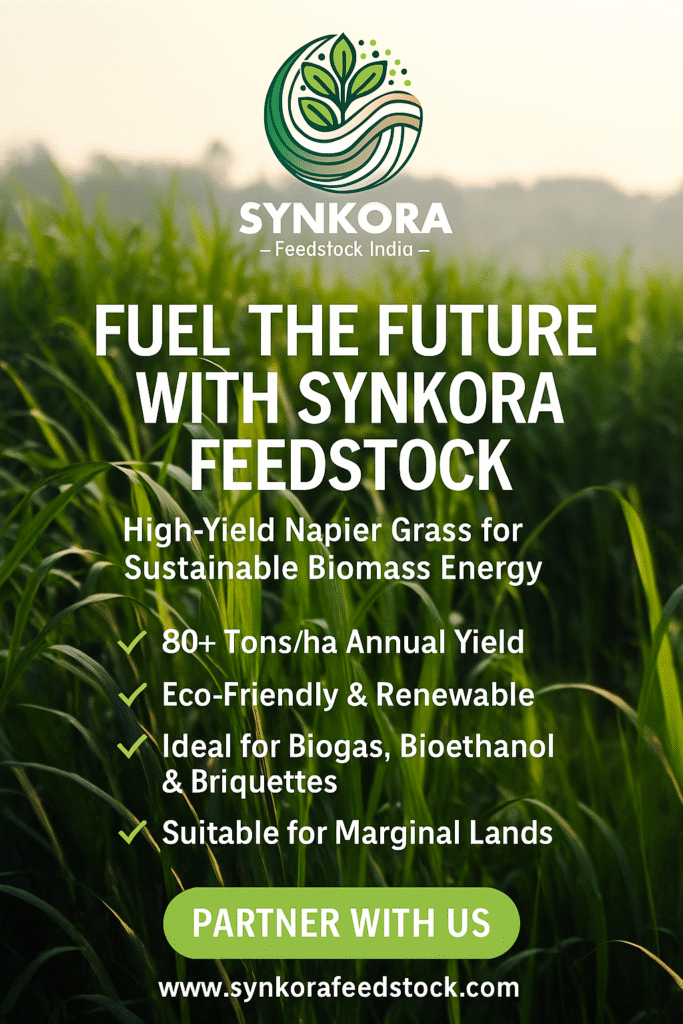
Napier Grass is known for its incredibly high biomass productivity. Under optimal conditions, it can produce up to 40–80 tons of dry matter per hectare per year, which is significantly higher than many other energy crops like switchgrass or miscanthus.
2. Rapid Growth Cycle
It has a short harvesting cycle, often every 45 to 60 days, which means multiple harvests are possible throughout the year. This frequent harvesting translates into a steady supply of raw material for biomass energy production.
3. Low Input Requirements
Once established, Napier Grass requires minimal chemical inputs such as fertilizers and pesticides. It can grow well on marginal lands, reducing competition with food crops for arable land.
4. High Energy Content
Napier Grass has a high calorific value, making it efficient for combustion and conversion into biofuels such as bioethanol or biogas. This energy potential makes it suitable for industrial biomass power plants and rural energy generation.
5. Carbon Sequestration
Like other plants, Napier Grass absorbs carbon dioxide from the atmosphere during photosynthesis. Its dense foliage and root system make it effective in capturing and storing carbon, contributing to the fight against climate change.
Applications in Bioenergy
Napier Grass can be converted into various forms of bioenergy:
- Biogas: Through anaerobic digestion, it produces methane-rich biogas suitable for cooking, lighting, and even powering engines.
- Bioethanol: The cellulose content in Napier Grass makes it a good candidate for second-generation ethanol production.
- Briquettes and Pellets: The grass can be processed into solid fuel formats, ideal for heating and industrial energy needs.
Economic and Environmental Impact
For farmers, Napier Grass offers an additional revenue stream. It creates opportunities in rural areas by supplying biomass to energy companies, thus supporting local economies. Environmentally, its use as a renewable energy source reduces dependency on fossil fuels and lowers greenhouse gas emissions.
Additionally, Napier Grass improves soil health, prevents erosion, and serves as a windbreak or barrier crop. These ecological benefits make it a sustainable choice for agroforestry systems.
Challenges and Considerations
While Napier Grass offers many benefits, challenges remain in terms of:
- Harvesting and transportation logistics
- Initial plantation setup costs
- Storage and moisture control
However, with growing investments in biomass infrastructure and technology, these challenges are steadily being addressed.
Conclusion
Napier Grass is more than just a fodder crop—it’s a sustainable powerhouse that holds immense promise for the future of biomass energy. With its high yield, fast growth, and minimal input needs, it stands out as a viable solution to meet increasing global energy demands while protecting the planet. As the world shifts toward renewable energy, Napier Grass is truly a game changer in the biomass revolution.
What is Napier Grass used for?
Napier Grass is primarily used as fodder for livestock, but it’s also gaining popularity as a high-yield biomass crop used in producing bioenergy like biogas, bioethanol, and biomass briquettes.
Why is Napier Grass considered a good biomass crop?
Napier Grass is ideal for biomass because of its high yield (up to 80 tons/hectare/year), fast growth rate, low input requirements, and high energy content. It also helps in carbon sequestration and soil conservation.
Can Napier Grass grow on poor-quality land?
Yes. Napier Grass is hardy and can grow on marginal lands with minimal fertilizer. This makes it suitable for areas not ideal for food crops.